
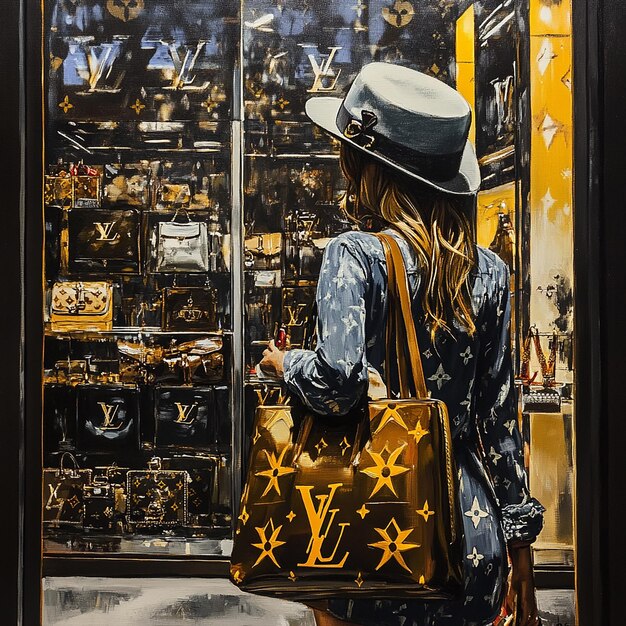
Have you ever wondered about the origins of the iconic interlocking “LV” monogram? Or perhaps how a brand synonymous with luxury and travel goods ascended to become the world’s most valuable luxury label? Louis Vuitton, a name that evokes images of exquisite craftsmanship, timeless design, and unparalleled exclusivity, boasts a history as rich and intricate as its signature patterns.
Join us on a journey through time, tracing the remarkable evolution of Louis Vuitton from a humble trunk-making workshop in 19th-century Paris to a global fashion powerhouse. You will discover the visionary minds, groundbreaking innovations, and strategic decisions that cemented its status at the pinnacle of the luxury world.
The Visionary Founder: Louis Vuitton’s Humble Beginnings
The story of Louis Vuitton begins not in the opulent salons of Paris, but in the small, rural village of Anchay, in the Jura region of eastern France. Born in 1821, Louis Vuitton Malletier was destined for a life far removed from his modest upbringing.
At the tender age of 13, driven by ambition and a desire for a better life, he embarked on a two-year, 292-mile journey to Paris. He traveled entirely on foot, taking odd jobs along the way to sustain himself.
Upon arriving in the bustling capital in 1837, Louis found work as an apprentice to Monsieur Maréchal, a renowned trunk maker and packer. This apprenticeship proved to be formative, deeply immersing him in the intricate craft of custom-making boxes and packing clothing for the wealthy elite.
He meticulously learned the art of creating durable, aesthetically pleasing luggage. More importantly, he gained invaluable insight into the specific needs and desires of traveling aristocrats and discerning clients.
The Birth of a Revolutionary Idea
By the mid-19th century, travel was undergoing a significant transformation. Steamships and trains were becoming popular modes of transport, demanding luggage that was both sturdy and practical.
Traditional rounded-top trunks, designed to shed water during carriage travel, were impractical for stacking in the new era of organized cargo holds. Louis Vuitton recognized this critical flaw and envisioned a solution.
Innovation in Travel Goods: The Founding of Louis Vuitton (1854-1892)
Armed with a decade and a half of expertise, Louis Vuitton opened his own workshop at 4 Rue Neuve des Capucines near the Place Vendôme in Paris in 1854. This marked the official birth of the Louis Vuitton brand.
His inaugural product was a groundbreaking flat-topped trunk. This design revolutionized travel, allowing trunks to be easily stacked, thereby maximizing space and efficiency during transit.
Furthermore, he introduced the lightweight, airtight, and durable Trianon Canvas. This innovative material, a grey canvas, protected contents from moisture and wear, distinguishing his creations from the heavier, less practical leather trunks of the era.
The innovation quickly caught the attention of Empress Eugénie de Montijo, wife of Napoleon III, who appointed him her personal trunk maker. This royal patronage instantly elevated his brand’s reputation and desirability.
Expanding the Vision and Battling Imitation
As his reputation grew, so did the problem of imitation. To combat counterfeiters, Louis Vuitton introduced new canvas patterns.
In 1876, he launched the striped canvas design, followed by the iconic Damier Canvas in 1888. The Damier pattern, featuring alternating light and dark brown squares, famously bore the inscription “Marque L. Vuitton déposée” (L.
Vuitton registered trademark).
The brand’s success led to expansion, including a larger workshop in Asnières-sur-Seine in 1859. Louis Vuitton passed away in 1892, leaving a thriving business and a legacy of innovation to his son, Georges Vuitton.
Global Expansion and the Iconic Monogram (1893-1930s)
Georges Vuitton inherited his father’s entrepreneurial spirit and a keen understanding of brand protection. He dedicated himself to transforming Louis Vuitton into a global enterprise.
He showcased the brand’s products at the Chicago World’s Fair in 1893 and the Paris Exhibition in 1900, introducing Louis Vuitton to an international audience.
However, the persistent issue of counterfeiting continued to plague the brand. In a brilliant move to further differentiate Louis Vuitton and honor his father’s memory, Georges created the globally recognized Monogram Canvas in 1896.
This intricate pattern features the interlocking “LV” initials, four-petaled flowers, four-pointed stars, and concave-sided diamonds. Each element is carefully arranged against a dark brown background, creating a visually complex and difficult-to-reproduce design.
The Monogram Canvas was an instant success and quickly became synonymous with the brand. It was one of the first instances of branding a product with designer initials, setting a precedent for luxury fashion.
New Horizons and Enduring Designs
Under Georges’ leadership, Louis Vuitton opened its first stores in London (1885), New York (1898), and Philadelphia (1904). The brand also expanded its product range beyond trunks.
Iconic travel bags like the Steamer Bag (1901), designed to be kept inside a trunk, and the Keepall (1930), a soft, foldable travel bag, were introduced during this period. These designs remain popular and relevant today, a testament to their timeless appeal.
Diversification and Modernization (Mid-20th Century)
Gaston-Louis Vuitton, Georges’ son, took the helm in 1936. While respecting the brand’s heritage in travel goods, he began to steer Louis Vuitton towards diversification.
He introduced more leather goods, smaller accessories, and handbags into the collection. This strategic move was crucial as travel habits evolved and the demand for lighter, more versatile items grew.
One of the most enduring designs from this era is the Noé bag, created in 1932. It was originally commissioned by a champagne producer to carry five bottles of champagne, demonstrating the brand’s ability to blend practicality with elegance.
Despite the challenges of World War II, Louis Vuitton maintained its commitment to quality and craftsmanship. The post-war economic boom further fueled the demand for luxury goods, allowing the brand to solidify its position.
The brand’s workshops continued to employ traditional techniques, ensuring that every product met the highest standards of excellence. This unwavering dedication to quality became a cornerstone of its lasting appeal.
The LVMH Era: A New Chapter of Dominance (1987-Present)
The most significant turning point in Louis Vuitton’s modern history occurred in 1987 with the merger of Louis Vuitton and Moët Hennessy. This created LVMH Moët Hennessy Louis Vuitton, the world’s leading luxury conglomerate.
Under the visionary leadership of Bernard Arnault, LVMH embarked on an aggressive strategy of acquiring and nurturing luxury brands. Louis Vuitton, as a flagship brand, benefited immensely from this new structure.
Arnault’s genius lay in maintaining the exclusivity and heritage of each brand while leveraging the collective power of the group. This allowed Louis Vuitton to expand into new categories without diluting its core identity.
Venturing into Fashion and Beyond
In 1997, Louis Vuitton made a groundbreaking move by appointing American designer Marc Jacobs as its first creative director for ready-to-wear. This marked the brand’s official entry into the world of high fashion beyond luggage and leather goods.
Jacobs’ tenure (1997-2013) was transformative. He introduced women’s and men’s ready-to-wear collections, shoes, jewelry, and watches, propelling Louis Vuitton into a full-fledged fashion house.
His innovative collaborations with contemporary artists like Stephen Sprouse (graffiti monogram, 2001), Takashi Murakami (multicolor monogram, 2003), and Yayoi Kusama (polka dots, 2012) redefined luxury branding. These collaborations introduced the brand to younger, art-savvy audiences and generated immense global buzz.
Following Jacobs, Nicolas Ghesquière took over as creative director for women’s collections in 2013, bringing a futuristic and architectural sensibility. In 2018, Virgil Abloh was appointed as the first Black artistic director for men’s wear, ushering in an era of streetwear-infused luxury and cultural commentary until his passing in 2021.
Most recently, Pharrell Williams was named Men’s Creative Director in 2023, continuing the brand’s tradition of innovation and cultural relevance.
Today, Louis Vuitton operates a vast global retail network, maintains a strong digital presence, and continues to set trends in the luxury market. Its consistent innovation, coupled with a deep respect for its heritage, has solidified its position as the world’s most valuable luxury brand.
Key Milestones in Louis Vuitton’s Journey
Understanding the brand’s trajectory requires a look at its pivotal moments:
| Year | Milestone | Significance |
|---|---|---|
| 1821 | Louis Vuitton is born in Anchay, France. | The very beginning of the founder’s life journey. |
| 1837 | Louis Vuitton arrives in Paris and apprentices with Monsieur Maréchal. | Foundation of his trunk-making skills and understanding of luxury travel. |
| 1854 | Louis Vuitton opens his own workshop in Paris. | Official founding of the Louis Vuitton brand; introduction of flat-top trunks and Trianon Canvas. |
| 1888 | Introduction of the Damier Canvas. | Early effort to combat counterfeiting with a distinctive pattern. |
| 1892 | Louis Vuitton passes away; Georges Vuitton takes over. | Transition of leadership; continuation of the family legacy. |
| 1896 | Creation of the Monogram Canvas. | Iconic brand symbol, revolutionary anti-counterfeiting measure, global recognition. |
| 1901 | Introduction of the Steamer Bag. | Expansion into versatile travel bags beyond trunks. |
| 1932 | Introduction of the Noé Bag. | Iconic handbag design, showcasing diversification into smaller leather goods. |
| 11987 | Merger to form LVMH Moët Hennessy Louis Vuitton. | Strategic move that propelled Louis Vuitton into a global luxury conglomerate. |
| 1997 | Marc Jacobs appointed first Creative Director for ready-to-wear. | Entry into high fashion, diversification beyond travel goods, new product categories. |
| 2001 | Collaboration with Stephen Sprouse. | Beginning of influential artist collaborations, attracting new generations. |
| 2018 | Virgil Abloh appointed Men’s Artistic Director. | Pioneering move in luxury streetwear, significant cultural impact. |
The Pillars of Enduring Value
What truly makes Louis Vuitton the world’s most valuable luxury brand? It’s a combination of several deeply ingrained principles that you can observe in every aspect of its operation:
- Uncompromising Craftsmanship: Every Louis Vuitton product, from a hand-stitched bag to a bespoke trunk, reflects centuries-old techniques blended with modern precision. Artisans are trained for years, ensuring that each item is a masterpiece of durability and finish.
- Continuous Innovation: While deeply rooted in heritage, Louis Vuitton is never stagnant. You see this in its constant exploration of new materials, designs, and collaborations, keeping the brand fresh and relevant to contemporary tastes.
- Strategic Scarcity and Exclusivity: Louis Vuitton carefully manages its distribution, avoiding oversupply and maintaining an aura of exclusivity. Limited editions and hard-to-find items fuel desire and reinforce its luxury status.
- Powerful Brand Storytelling: The brand consistently leverages its rich history and pioneering spirit. You are not just buying a product; you are investing in a legacy of travel, innovation, and Parisian elegance.
- Global Brand Recognition and Marketing: Through strategic advertising, celebrity endorsements, and a strong presence in fashion capitals, Louis Vuitton maintains top-of-mind awareness. Its iconic motifs are instantly recognizable worldwide.
Conclusion
The journey of Louis Vuitton is a compelling narrative of ambition, innovation, and unwavering commitment to excellence. From Louis Vuitton’s solitary walk to Paris to its current status as a global luxury titan, the brand has consistently redefined the boundaries of luxury.
You have seen how its ingenuity in travel goods, strategic brand protection efforts, and bold diversification into fashion under the LVMH umbrella have shaped its destiny. Louis Vuitton is more than just a brand; it is a cultural phenomenon, a symbol of aspiration, and a testament to the power of a well-crafted vision.
Its enduring value lies not only in its exquisite products but also in its ability to evolve while staying true to its core identity. As you now know, the story of Louis Vuitton is a masterclass in building and sustaining a legacy that continues to captivate the world.
Frequently Asked Questions (FAQ)
When was Louis Vuitton founded?
Louis Vuitton was founded in 1854 by Louis Vuitton Malletier in Paris, France. He opened his first workshop at 4 Rue Neuve des Capucines.
What makes Louis Vuitton so expensive?
Several factors contribute to Louis Vuitton’s high prices. These include the use of high-quality materials, meticulous handcrafted production by skilled artisans, strong brand legacy and marketing, controlled distribution to maintain exclusivity, and continuous innovation in design and technology.
Is Louis Vuitton worth the investment?
For many, a Louis Vuitton item is considered a worthwhile investment due to its exceptional durability, timeless designs that often retain or even increase in value on the resale market, and the prestige associated with owning a piece of luxury history. Its strong brand equity often ensures resale value.
How can I spot a fake Louis Vuitton product?
Authenticating Louis Vuitton products involves checking several details: scrutinize the quality of materials and stitching, examine the heat stamp and date code, verify the hardware (should be solid and engraved), ensure the monogram pattern is symmetrical and correctly aligned, and always purchase from authorized retailers or reputable secondary markets.
Who owns Louis Vuitton today?
Louis Vuitton is owned by LVMH Moët Hennessy Louis Vuitton, the world’s largest luxury goods conglomerate. Bernard Arnault is the Chairman and CEO of LVMH.
Leave a Reply