
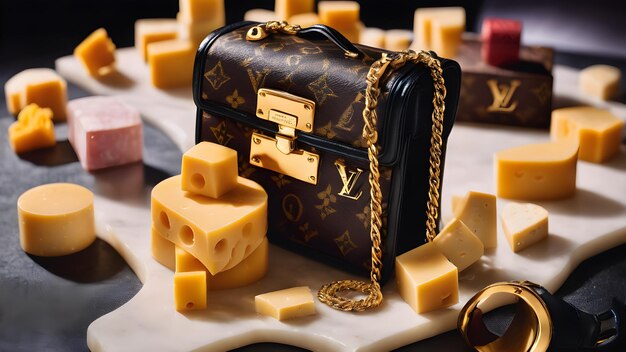
Have you ever wondered about the origins of the iconic Louis Vuitton monogram, or how a simple trunk-maker’s vision blossomed into a global luxury empire? Louis Vuitton is more than just a brand; it is a symbol of unparalleled craftsmanship, innovative design, and aspirational luxury.
Today, it stands proudly as the world’s most valuable luxury brand, a testament to its enduring legacy and strategic evolution. This article will take you on an extraordinary journey, tracing the remarkable history of Louis Vuitton from its humble 19th-century beginnings to its current dominant position at the pinnacle of the luxury world. You will discover the key innovations, pivotal moments, and brilliant minds that shaped this iconic house.
The Humble Beginnings: A Visionary Trunk-Maker (1821-1854)
Our story begins in 1821, in a small, remote village in the Jura region of France, where Louis Vuitton was born. At just 13 years old, driven by ambition and a desire for a better life, he embarked on a two-year journey by foot to Paris.
This arduous trek, covering over 250 miles, speaks volumes about his determination. Upon arriving in the bustling capital in 1837, he apprenticed himself to Monsieur Maréchal, a renowned box-maker and packer.
During this period, travel was undergoing a significant transformation. New modes of transport, like trains and steamships, were emerging, but luggage was still largely inefficient.
Most trunks had domed tops, designed for water runoff on horse-drawn carriages, making them impossible to stack. Louis Vuitton, with his keen eye for practicality and innovation, recognized this glaring problem.
Founding the House of Louis Vuitton (1854)
After 17 years of honing his skills and building a reputation, Louis Vuitton was ready to forge his own path. In 1854, he opened his own workshop at 4 Rue Neuve des Capucines, near the Place Vendôme, in Paris.
His initial focus was on creating bespoke trunks and packing goods for discerning clients. This was the moment the eponymous luxury house officially came into existence, laying the groundwork for its future success.
Innovation and Expansion: Revolutionizing Travel (1854-1892)
Louis Vuitton’s innovative spirit quickly set his brand apart. He didn’t just make trunks; he revolutionized them.
His most significant contribution was the introduction of the flat-topped trunk, a radical departure from the traditional domed designs. This simple yet brilliant change meant trunks could be stacked easily, making travel much more convenient and efficient.
The Trianon Canvas (1858)
To further enhance his revolutionary trunks, Vuitton developed a new material: the Trianon canvas. This grey, canvas-covered material was lightweight, durable, and waterproof, offering superior protection for travelers’ belongings.
It quickly became a symbol of quality and innovation, distinguishing his creations from those of his competitors. The demand for his products soared, attracting an elite clientele including Empress Eugénie, wife of Napoleon III.
Battling Counterfeiters and Expanding Horizons
The success of Louis Vuitton unfortunately led to widespread counterfeiting. To combat this, he introduced new designs and patterns.
In 1876, he launched the striped canvas design, featuring alternating beige and brown stripes. This was an early attempt at brand protection and differentiation, showcasing the brand’s proactive approach to safeguarding its identity.
The company continued to expand, opening its first store outside Paris in London in 1885. This marked the beginning of its international reach, solidifying its presence in key global markets.
Louis Vuitton passed away in 1892, leaving behind a thriving business and a legacy of innovation. His son, Georges Vuitton, inherited the reins, ready to propel the brand to even greater heights.
The Era of Monograms: Global Recognition and Protection (1893-1936)
Georges Vuitton understood the importance of a strong brand identity, especially in the face of persistent counterfeiting. He sought to create a pattern that was instantly recognizable and profoundly unique.
His ingenuity led to the creation of what would become one of the most iconic symbols in the world of luxury fashion.
The Birth of the Monogram Canvas (1896)
In 1896, Georges Vuitton introduced the legendary Monogram canvas. This intricate pattern features the interlocking “LV” initials, inspired by his father’s name, alongside quatrefoils (four-leaf flowers) and four-pointed stars.
The design was a tribute to his father and drew inspiration from Japanese mon designs, popular during the late Victorian era. This canvas was not just aesthetically pleasing; it was a strategic move to protect the brand’s intellectual property.
The Monogram canvas quickly became synonymous with Louis Vuitton, establishing a powerful visual identity that transcended cultures. It transformed the brand from a mere manufacturer of travel goods into a global fashion statement.
Global Exhibitions and New Silhouettes
Georges Vuitton was a master of marketing and global outreach. He showcased Louis Vuitton products at various World’s Fairs, including the Chicago World’s Fair in 1893 and the Paris International Exhibition in 1900.
These exhibitions introduced the brand to a wider international audience, cementing its reputation for luxury and innovation. The early 20th century also saw the introduction of some of the brand’s most enduring bag styles.
The Keepall bag, designed for travelers, was introduced in 1930, followed by the iconic Speedy bag in 1932. These timeless designs continue to be highly sought after today, showcasing the brand’s lasting appeal.
Post-War Resurgence and Diversification (1937-1987)
The mid-20th century presented new challenges and opportunities for Louis Vuitton. Despite the disruptions of two World Wars, the brand demonstrated remarkable resilience.
Under the leadership of Gaston-Louis Vuitton, Georges’ son, the company continued to innovate and adapt to changing consumer demands.
Expanding Product Lines
In the post-war era, Louis Vuitton began to diversify its product offerings beyond traditional trunks and travel bags. The brand introduced small leather goods, accessories, and even silk scarves.
This expansion allowed Louis Vuitton to cater to a broader range of luxury needs and solidify its presence in the burgeoning fashion market. The introduction of new materials, such as Epi leather in 1985, further showcased its commitment to innovation.
Epi leather, with its distinctive textured pattern, offered a more subtle and sophisticated alternative to the Monogram canvas. It quickly became another beloved signature of the house.
The Rise of Alain Chevalier
In the 1970s, Alain Chevalier, a shrewd businessman, was brought in to modernize the company’s operations. He recognized the immense potential of the Louis Vuitton brand and spearheaded its transformation into a global luxury powerhouse.
Chevalier implemented aggressive international expansion strategies, opening new boutiques in major cities worldwide. He also significantly ramped up production to meet growing demand, without compromising the brand’s stringent quality standards.
By the mid-1980s, Louis Vuitton was a publicly traded company, experiencing unprecedented growth. This period of rapid expansion set the stage for one of the most significant mergers in luxury history.
The LVMH Era: A Conglomerate’s Vision (1987-Present)
The year 1987 marked a monumental turning point for Louis Vuitton. It merged with Moët Hennessy, a leading producer of champagne and cognac, to form LVMH Moët Hennessy Louis Vuitton.
This merger created the world’s largest luxury conglomerate, a strategic move that would profoundly impact Louis Vuitton’s trajectory. Bernard Arnault, a visionary French businessman, orchestrated this merger and quickly rose to become the chairman and CEO of LVMH.
Arnault’s philosophy was simple yet powerful: acquire the most prestigious luxury brands and empower them to thrive while maintaining their unique heritage and identity. Under his leadership, Louis Vuitton embarked on an era of unprecedented growth and diversification.
Entering Ready-to-Wear and Beyond
A pivotal moment in the brand’s modern history was the appointment of Marc Jacobs as its first creative director in 1997. This move signaled Louis Vuitton’s ambitious foray into women’s and men’s ready-to-wear fashion.
Jacobs successfully translated the brand’s heritage into contemporary fashion collections, attracting a new generation of luxury consumers. His tenure was marked by groundbreaking collaborations with artists like Stephen Sprouse and Takashi Murakami, which introduced vibrant, playful elements to the classic Monogram.
These collaborations generated immense buzz and demonstrated Louis Vuitton’s ability to constantly reinvent itself while staying true to its core identity. Following Jacobs, Nicolas Ghesquière took over women’s creative direction, bringing a futuristic and architectural sensibility.
Virgil Abloh’s appointment as men’s artistic director in 2018 revolutionized luxury streetwear, making Louis Vuitton even more culturally relevant. Most recently, Pharrell Williams has continued to push boundaries as the men’s creative director.
Digital Transformation and Global Dominance
In the 21st century, Louis Vuitton has embraced digital transformation, investing heavily in e-commerce and a strong online presence. This strategic move has made its products accessible to a global audience, further solidifying its market leadership.
The brand continues to open flagship stores in prime locations worldwide, offering unique and immersive retail experiences. Its commitment to innovation, craftsmanship, and strategic marketing remains unwavering.
Why Louis Vuitton Remains the World’s Most Valuable Luxury Brand
Louis Vuitton’s journey to becoming the world’s most valuable luxury brand is a multifaceted story, built on a foundation of several key pillars. Understanding these factors will help you appreciate its enduring success.
- Unwavering Commitment to Craftsmanship and Quality: From the meticulous stitching of its leather goods to the selection of premium materials, Louis Vuitton maintains exceptionally high standards. Every product is a testament to the brand’s dedication to excellence, ensuring durability and timeless appeal.
- Rich Heritage and Powerful Brand Storytelling: The brand leverages its nearly two-century-old history, telling compelling stories that resonate with consumers. Its narrative of innovation, travel, and luxury creates an emotional connection, making its products more than just items, but heirlooms and symbols of status.
- Iconic and Instantly Recognizable Designs: The Monogram, Damier, and Epi leather patterns are globally recognizable. These distinctive designs serve as powerful brand identifiers, making Louis Vuitton products instantly identifiable and highly desirable.
- Strategic Exclusivity and Scarcity: Louis Vuitton carefully controls its distribution channels and product availability. This deliberate strategy of limited production and carefully managed supply creates a sense of exclusivity and urgency, fueling demand and maintaining the brand’s aspirational allure.
- Continuous Innovation and Adaptability: While respecting its heritage, Louis Vuitton consistently innovates. The brand embraces new technologies, materials, and creative directions, collaborating with contemporary artists and designers. This ensures its relevance in a constantly evolving fashion landscape.
- Global Presence and Masterful Marketing: With a vast network of boutiques in prime locations across continents, Louis Vuitton has a strong physical presence. Its marketing campaigns are sophisticated and aspirational, featuring celebrities and influencers, further amplifying its global reach and desirability.
- The LVMH Conglomerate Effect: Being part of the LVMH group provides Louis Vuitton with unparalleled resources, strategic guidance, and synergies. This affiliation strengthens its market position, allowing for greater investment in innovation, marketing, and global expansion.
These combined factors create a powerful synergy, ensuring Louis Vuitton not only maintains but consistently elevates its position as the undisputed leader in the global luxury market.
Illustrative Louis Vuitton Brand Valuation Over Time
To give you a better understanding of Louis Vuitton’s consistent value, here is an illustrative table of its brand valuation over certain years. Please note that exact figures vary slightly across different valuation reports (e.g., Interbrand, Kantar BrandZ), but the trend of high valuation is consistent.
| Year | Illustrative Brand Value (USD Billions) | Key Milestone / Context |
|---|---|---|
| 2010 | 19.7 | Post-recession recovery, strong global expansion. |
| 2014 | 28.1 | Marc Jacobs’ final collections, Nicolas Ghesquière’s arrival. |
| 2018 | 32.2 | Virgil Abloh appointed Men’s Artistic Director. |
| 2021 | 36.1 | Resilience during global pandemic, strong e-commerce growth. |
| 2023 | 47.2 | Continued market leadership, high demand for luxury goods. |
*Note: Figures are illustrative and based on general industry trends and publicly available reports for brand valuation over time. Actual figures may vary.
Conclusion
From a determined young trunk-maker to the world’s most valuable luxury brand, Louis Vuitton’s journey is a compelling narrative of vision, innovation, and relentless pursuit of excellence. You have seen how a commitment to quality, strategic branding, and clever adaptation to market changes have been crucial.
The brand’s ability to blend its rich heritage with contemporary trends, while maintaining an aura of exclusivity, is truly remarkable. Louis Vuitton stands as a testament to the power of a strong brand identity and a clear, unwavering vision.
As you reflect on its history, it becomes clear that Louis Vuitton’s success is not just about selling products; it’s about selling a dream, a lifestyle, and a piece of history. This legacy ensures its continued dominance at the zenith of the luxury world for generations to come.
Frequently Asked Questions (FAQ)
What does Louis Vuitton mean?
Louis Vuitton is simply the name of its founder, Louis Vuitton Malletier. “Malletier” is a French term for a trunk-maker or luggage manufacturer, reflecting the brand’s origins.
Why is Louis Vuitton so expensive?
Louis Vuitton products are expensive due to several factors: the use of high-quality materials, meticulous craftsmanship, exclusive designs, strong brand heritage, and strategic marketing that positions it as a luxury, aspirational item. The brand also maintains a controlled supply to enhance exclusivity.
How can I tell if a Louis Vuitton product is authentic?
Authenticating a Louis Vuitton product requires careful inspection. Look for consistent stitching, high-quality materials, specific date codes (found on most items made after 1980), and correct typography on hardware and labels. It’s always best to purchase from official Louis Vuitton boutiques or authorized retailers.
When was Louis Vuitton founded?
Louis Vuitton founded his eponymous company in Paris, France, in 1854.
Who owns Louis Vuitton today?
Louis Vuitton is owned by LVMH Moët Hennessy Louis Vuitton, the world’s largest luxury goods conglomerate. Bernard Arnault is the chairman and CEO of LVMH.
Leave a Reply