
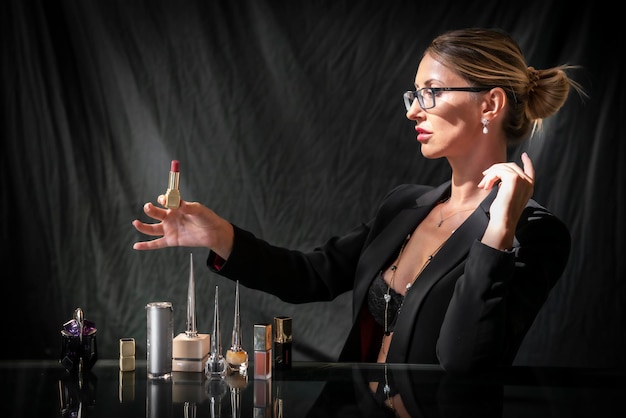
Step into a world where scent transcends mere fragrance, becoming a symbol of liberation, sophistication, and timeless elegance. You’re about to discover the captivating journey of Chanel No. 5, a perfume that has not only graced the vanities of millions but has also profoundly shaped the history of luxury and fashion.
More than just a beautiful aroma, Chanel No. 5 is a testament to the revolutionary spirit of its creator, Gabrielle “Coco” Chanel. Its story is woven with innovation, controversy, and an enduring mystique that continues to enchant generations.
Prepare to uncover the secrets behind the world’s most famous perfume.
The Visionary Behind the Scent: Coco Chanel’s Revolutionary Spirit
To truly understand Chanel No. 5, you must first understand the woman who conceived it: Gabrielle “Coco” Chanel. She was a force of nature, a designer who single-handedly redefined women’s fashion in the early 20th century.
Her vision was always clear: to free women from the constraints of corsetry and elaborate ornamentation.
Coco Chanel championed simplicity, comfort, and understated luxury. She introduced practical yet chic designs like the little black dress, tweed suits, and jersey fabrics. Her personal style was a reflection of her independent spirit and modern ideals.
By the 1920s, Chanel had already established herself as a fashion icon. However, she felt that something was missing from her empire: a signature scent. She desired a perfume that would embody her revolutionary ideals, a fragrance that was as modern and liberating as her clothing designs.
You see, existing perfumes of the era were often single-flower scents, perceived by Chanel as too simple or too overtly sensual. She wanted something more complex, more nuanced, a scent that couldn’t be easily identified yet was unmistakably feminine and powerful.
The Quest for the Unforgettable Fragrance
Coco Chanel’s desire for a unique perfume was not just about adding another product to her line. It was an extension of her philosophy. She envisioned a fragrance that would capture the essence of the modern woman – strong, independent, and multifaceted.
Her vision led her to Ernest Beaux, a renowned perfumer with a distinguished background. Beaux had previously served as the official perfumer to the Russian imperial court, bringing with him a wealth of experience and an adventurous spirit.
Chanel gave Beaux a very specific brief. She wanted a perfume that “smelled like a woman, not a rose.” This seemingly simple instruction was incredibly profound. It challenged Beaux to move beyond traditional floral bouquets and create something entirely new and abstract.
She also famously stated, “I want to give women an artificial perfume, I say artificial because I don’t want any flower, you know, a rose or lily of the valley, I want a composition.” This was a radical departure from the norm, pushing the boundaries of perfumery.
Ernest Beaux and the Revolutionary Formula
Ernest Beaux embraced Chanel’s challenge with innovative zeal. He had been experimenting with synthetic compounds called aldehydes, which were relatively new to perfumery at the time. Aldehydes are organic compounds that can add a sparkling, effervescent, and abstract quality to a fragrance.
Beaux presented Chanel with several samples, numbered 1 through 5, and 20 through 24. It was the fifth vial that captured Coco Chanel’s imagination. You might wonder why she chose “No.
5.” Her superstitious nature played a role, as five was her lucky number. Her fashion shows were often presented on the fifth day of the fifth month.
The formula for Chanel No. 5 was groundbreaking. It contained an unprecedented concentration of aldehydes, which lifted and brightened the traditional floral notes.
This created a complex, multi-layered scent that was both familiar and utterly unique.
The perfume’s heart is a rich bouquet of jasmine from Grasse and May rose, balanced by notes of ylang-ylang, neroli, and sandalwood. Beneath these, you’ll find a warm, sensual base of vetiver, vanilla, and musk. It was a symphony of over 80 ingredients, meticulously blended to achieve perfect harmony.
This innovative use of aldehydes gave Chanel No. 5 its distinctive abstract quality. It didn’t smell like any single flower, but rather an exquisite, sophisticated blend that was difficult to pinpoint.
This was exactly what Coco Chanel had envisioned.
The Iconic Bottle: Simplicity as the Ultimate Sophistication
Just as groundbreaking as the scent itself was its packaging. In an era where perfume bottles were often ornate, heavily decorated, and designed to reflect the preciousness of their contents, Coco Chanel once again defied convention. She opted for extreme minimalism.
You will notice the clean, rectilinear lines of the bottle, reminiscent of a whiskey decanter or a laboratory flask. This design was a radical departure from the elaborate, often rococo styles popular at the time. Chanel believed that the fragrance itself should be the star, not the vessel.
The original bottle, launched in 1921, featured a small, rectangular stopper. Over the years, the stopper has been refined, becoming larger and more faceted, resembling an emerald cut diamond. Yet, its core simplicity has remained untouched.
The label is equally understated: a simple white rectangle with black lettering, clearly stating “CHANEL N°5.” This minimalist approach exemplified Chanel’s philosophy that true luxury lies in quality and design, not in excessive embellishment.
The bottle’s enduring design has achieved iconic status, even being featured in the Museum of Modern Art in New York. Its timeless elegance ensures that it remains instantly recognizable and a symbol of sophistication, proving that sometimes, less truly is more.
The Launch and Early Success
Chanel No. 5 was first introduced to a select group of Chanel’s elite clientele on May 5, 1921. Coco Chanel initially gave bottles to her close friends and influential figures, generating an exclusive buzz.
The initial launch wasn’t a grand advertising campaign, but rather a strategic, word-of-mouth approach.
The perfume quickly gained traction among the fashionable elite in Paris. Its unique aroma and association with the chic, modern image of Coco Chanel made it highly desirable. Women flocked to her boutique to acquire this groundbreaking scent.
In 1924, Pierre Wertheimer, a businessman, entered into an agreement with Coco Chanel to form Parfums Chanel. Wertheimer took 70% of the company, with Théophile Bader (owner of Galeries Lafayette) taking 20%, and Chanel herself retaining only 10%. This partnership was crucial for the global distribution and manufacturing of Chanel No.
5, allowing it to reach a much wider audience.
This partnership, though contentious for Chanel later on, ensured the perfume’s commercial success and widespread availability. It transitioned Chanel No. 5 from an exclusive boutique item to a globally recognized luxury product, solidifying its place in history.
World War II and Beyond: Maintaining its Mystique
The outbreak of World War II presented significant challenges for many luxury brands, including Chanel. During the Nazi occupation of Paris, Coco Chanel closed her fashion house, but Chanel No. 5 continued to be sold, primarily in the United States.
Coco Chanel’s actions during the war remain a controversial chapter in her life. She attempted to regain full control of Parfums Chanel from the Wertheimer family, arguing that as a Jewish family, they should forfeit their ownership under Nazi laws. However, the Wertheimers had shrewdly transferred ownership to a non-Jewish friend, ensuring their assets were protected.
Despite the controversies surrounding its creator, Chanel No. 5’s mystique only grew. American soldiers returning from the war would line up outside the Chanel boutique in Paris to purchase bottles for their loved ones.
This act of bringing a piece of Parisian luxury back home further cemented its iconic status.
Its fame skyrocketed even further in 1952 when the legendary actress Marilyn Monroe was asked what she wore to bed. Her famous reply, “Just a few drops of Chanel No. 5,” instantly became one of the most iconic endorsements in advertising history.
This single statement catapulted the perfume into an unparalleled realm of desirability and cultural significance, making it synonymous with sensuality and glamour.
The Enduring Legacy and Cultural Impact
Over a century after its creation, Chanel No. 5 remains one of the best-selling perfumes in the world. Its enduring appeal lies in its timeless formula, its powerful brand story, and its consistent association with elegance and sophistication.
You’ll find it on dressing tables across the globe, a testament to its universal allure.
The formula has been carefully preserved by a succession of master perfumers, ensuring that the essence of Beaux’s original creation remains intact. While subtle adjustments might occur due to ingredient availability or regulatory changes, the core identity of Chanel No. 5 is fiercely protected.
Chanel’s marketing campaigns for No. 5 have always been as iconic as the perfume itself. From featuring Coco Chanel herself, to legendary faces like Catherine Deneuve, Nicole Kidman, and Brad Pitt, the brand consistently chooses ambassadors who embody sophistication, independence, and timeless beauty.
These campaigns reinforce the perfume’s status as more than just a scent; it’s a lifestyle.
The perfume has transcended its origins to become a cultural touchstone. It represents not just a fragrance, but an idea – the idea of liberated femininity, understated luxury, and enduring style. It continues to inspire artists, designers, and, of course, countless women and men who wear it.
Here’s a look at some key moments in the history of Chanel No. 5:
| Year | Event / Milestone | Significance |
|---|---|---|
| 1921 | Launch of Chanel No. 5 | Introduced to select clients, revolutionizing perfumery with aldehydes and abstract composition. |
| 1924 | Formation of Parfums Chanel | Partnership with Pierre Wertheimer for large-scale production and global distribution. |
| 1952 | Marilyn Monroe’s Endorsement | Her famous quote (“Just a few drops of Chanel No. 5”) turned the perfume into a global sensation. |
| 1959 | Exhibited at MoMA | Recognized as a masterpiece of industrial design, showcasing its iconic bottle. |
| 1980s | Andy Warhol’s Pop Art Series | Warhol created a series of silkscreen prints of the bottle, elevating it further into art and pop culture. |
| Present | Continual Reinvention | New advertising campaigns, limited editions, and flankers (e.g., No. 5 L’Eau) keep the brand relevant for new generations. |
You can see how each phase contributed to its legendary status, solidifying its place not just in perfume history, but in global culture.
Conclusion: The Timeless Allure of Chanel No. 5
From its audacious inception to its current reign as a global icon, the story of Chanel No. 5 is a compelling narrative of vision, innovation, and enduring appeal. It’s a testament to Gabrielle Chanel’s unwavering belief in modern femininity and her desire to create something truly unprecedented.
You have explored how Ernest Beaux’s revolutionary use of aldehydes, combined with the perfume’s complex floral composition, set it apart. The minimalist bottle, a bold statement in itself, further cemented its status as a masterpiece of design. And the powerful endorsements, from Marilyn Monroe to modern-day celebrities, have ensured its continued relevance.
Chanel No. 5 isn’t just a fragrance; it’s a piece of history, a work of art, and a symbol of timeless elegance that continues to captivate and inspire. When you wear Chanel No.
5, you’re not just applying perfume; you’re embracing a legacy of sophistication, independence, and enduring style that resonates with women across the globe.
It remains a beacon of luxury, proving that true innovation, when combined with an unwavering vision, can create something truly immortal.
Frequently Asked Questions (FAQ)
What makes Chanel No. 5 so famous?
Chanel No. 5’s fame stems from several factors. It was one of the first perfumes to use a significant amount of aldehydes, creating a revolutionary, abstract scent.
Its association with the iconic Coco Chanel, its minimalist bottle design, and its endorsement by figures like Marilyn Monroe have all contributed to its legendary status. It truly redefined what a modern perfume could be.
Who created Chanel No. 5?
Chanel No. 5 was created by Ernest Beaux, a master perfumer, at the request of Gabrielle “Coco” Chanel. She commissioned him to create a unique fragrance that embodied her vision of the modern woman, and she personally selected the fifth sample he presented.
What are the main notes in Chanel No. 5?
The main notes in Chanel No. 5 include a high concentration of aldehydes, which give it its characteristic sparkle. Its heart features a rich blend of May rose and Grasse jasmine, complemented by ylang-ylang, neroli, and iris.
The base notes provide warmth with sandalwood, vetiver, vanilla, and musk.
Why is it called Chanel No. 5?
The name “Chanel No. 5” comes from the fact that Coco Chanel chose the fifth sample presented to her by Ernest Beaux. Additionally, five was considered her lucky number, and she often presented her fashion collections on the fifth day of the fifth month.
Is Chanel No. 5 still popular today?
Absolutely. Over a century after its launch, Chanel No. 5 remains one of the best-selling and most recognizable perfumes in the world.
Its timeless appeal, sophisticated scent, and strong brand identity ensure its continued popularity across generations. Chanel also introduces modern interpretations like No. 5 L’Eau to attract new audiences.
How does Chanel No. 5 represent modern femininity?
Chanel No. 5 represents modern femininity through its complex, abstract scent that doesn’t mimic a single flower. This reflected Coco Chanel’s desire for a fragrance that smelled like a “composition,” embodying a multifaceted, independent woman rather than a simple, traditional ideal.
It broke away from conventional perfumery, just as Chanel’s fashion broke away from restrictive styles.
Leave a Reply